How to Check Whether a Georgia Water Advisory Covers Your Address
A water advisory can name a neighborhood, streets, a map boundary or a service area rather than every affected address. To know whether it applies to your home, first identify who supplies your water, then compare your exact address with the provider’s current notice and confirm any uncertainty directly with the official provider or agency.
Why an advisory has to be checked against your address
A water advisory is useful only if you can tell whether it applies where you live. A notice may refer to a section of a system, a particular area or an interruption affecting some customers. A nearby street, shared postal address or familiar neighborhood name may not establish whether your service is included. The important question is not simply whether an advisory exists nearby, but whether the provider identifies your address or service area as affected.
This matters especially when notices use boundaries that are not obvious from the street. A map might show a shaded area without naming every road. A written notice might list streets, intersections or landmarks. A text message might provide a short summary and direct you to a fuller notice. Each can be useful, but a partial summary may not give enough detail to decide whether your home is covered.
Do not rely only on distance from a reported problem. A water main break, outage or advisory near your block does not by itself tell you whether your address is included. Nor does the fact that a neighbor received a message settle the question for your home. The neighbor may have a different provider, a different service connection or a different contact preference on file.
If a notice applies, follow its instructions exactly. If you cannot tell whether it applies, treat that uncertainty as a reason to check with the official water provider promptly rather than guessing. An advisory may specify what customers should do, where it applies, and when customers can stop following the instructions. A map or social post without those details may not answer all of those questions.
University of Georgia Cooperative Extension states: Consumers are notified immediately of such violations. Because this information is from University of Georgia Cooperative Extension, which is not an official agency, confirm any notice and the required corrective actions with the official agency or water provider serving your address.
For an overview of how notices and their status can differ, see Utility, County or EPD: Who Issues and Lifts a Georgia Water Advisory?. The practical first step remains the same: establish which provider serves your property, then use that provider’s current information to make an address-level decision.
Identify the water provider serving the property
Before searching for an advisory, make sure you have the right provider. Georgia addresses can be served by different kinds of systems, and a city name or mailing address alone may not identify who supplies the tap water. Some addresses close to a city boundary may be served by a different system than a nearby home. A renter may also receive a bill through a landlord or property manager while the water itself comes from a public provider.
Start with documents tied to the property. A recent water bill, service-start paperwork, lease information, closing documents or a message from the property manager may name the provider. If those records are unclear or outdated, ask the landlord, property manager, seller or current account holder who supplies the water. Then verify the answer with the provider through its official website or current contact details.
Be specific when you ask. Give the complete service address, including any unit identifier, and explain that you are checking whether a current advisory applies. If the account holder’s name differs from yours, say that too. The provider may be able to confirm which system serves the address without sharing private account details.
A postal city is not always the water-service boundary. A home can use a provider whose name differs from the city on its mailing address, and neighboring properties can have different service arrangements. If you are uncertain, City Water or a Small Community System? Who Serves a Georgia Address explains why identifying the actual supplier matters. For homes close to municipal boundaries, Just Outside the City Limits: Whose Water Does a Georgia Address Get? offers related context.
If you do not have a bill, do not assume a provider based only on a nearby sign, the name of a town or what a neighbor says. Ask the property owner or manager, check official provider information, or contact the provider you believe serves the address and request confirmation. If that provider says the address is outside its service area, ask which provider should be contacted instead.
The right provider is also the right starting point for interpreting a notice. A countywide post, a regional news item or a map from a different provider may be useful background, but it cannot confirm that your service is covered. Once you know the supplier, use its official current notice or ask its staff to check the address.
Find the provider’s current notice or advisory map
Once you have identified the provider, look for its official outage, alert or advisory information. A provider’s website may group notices under customer alerts, service interruptions, public information or water quality. Use the site’s search function if the notice area is not easy to find, and look for the provider’s own update rather than relying on an old search result or an image shared without context.
The Macon Water Authority lists a Water Outages and Advisories Map under Public Information. That is a useful example of a provider publishing a map for its own service information. It does not mean that the map covers every Georgia address or that a map from one provider can establish the advisory status for another provider’s customers.
A map is a starting point, not always a complete answer. Check whether it identifies the affected area in words, shows streets or boundaries, and links to a written notice. If a map marker is near your home but the affected zone is unclear, do not infer coverage from the marker alone. Ask the provider to verify the service address.
Written notices can add context that a map does not show. Read the full notice for the area description, the reason for the advisory if provided, the customer instructions, and any update about when the notice changes or ends. If there are several notices on the provider’s page, make sure you are reading the one that matches the current event and not a notice from an earlier service interruption.
If the provider uses an alert sign-up service, account portal or social media channel, those can be helpful ways to receive updates. They should supplement, not replace, a direct check when you do not know whether the notice covers your address. A short alert may point to the fuller information, but it may omit street boundaries or detailed instructions.
Use the provider’s official website to find its current contact details if the notice is unclear or the map is difficult to interpret. Avoid relying on a phone number or contact information copied from an old post. When you contact the provider, have the address ready and ask whether the current advisory applies to that specific service location.
Compare the notice boundaries with the exact address
The key is to compare the notice’s coverage description with the property’s service address—not just the neighborhood name or approximate location. A notice may describe the affected area through street names, intersections, a map outline, a named subdivision or another boundary. Read each part carefully and compare it with the address shown on the water account, lease or property records.
| What the notice provides | What to check | What to do if it remains unclear |
|---|---|---|
| A list of streets or addresses | Whether the property’s service address appears, including its unit or building identifier | Ask the provider to check the exact service address |
| A map with a shaded area | Whether the property sits inside the outlined area, and whether the map has a legend or boundary description | Do not guess from a nearby marker; request an address-level confirmation |
| A description using intersections or landmarks | Whether the property falls within the described boundaries, not merely near them | Ask the provider to explain which side of the boundary is included |
| A neighborhood or subdivision name | Whether the provider’s notice defines that area clearly enough to include the property | Confirm with the provider rather than assuming all nearby homes are covered |
| A brief alert without detailed boundaries | Whether the alert points to a fuller notice or a current map | Find the full notice or contact the provider |
| An update saying the notice has changed | Whether the update applies to the same area and service event | Check the provider’s latest status for the address |
Check the map’s labels and legend before interpreting its colors or symbols. A colored region might represent an affected area, a work area or a different feature, depending on how the provider designed the map. If the map does not explain what a symbol means, ask the provider instead of treating the graphic as self-explanatory.
Pay attention to boundary wording. Terms such as “near,” “around” or “in the vicinity of” may not define which properties are included. Street boundaries can also be confusing when a notice names an intersection but does not say how far the affected area extends. Do not assume that every address on a named street is affected, or that a home is excluded because it is just beyond a visible line.
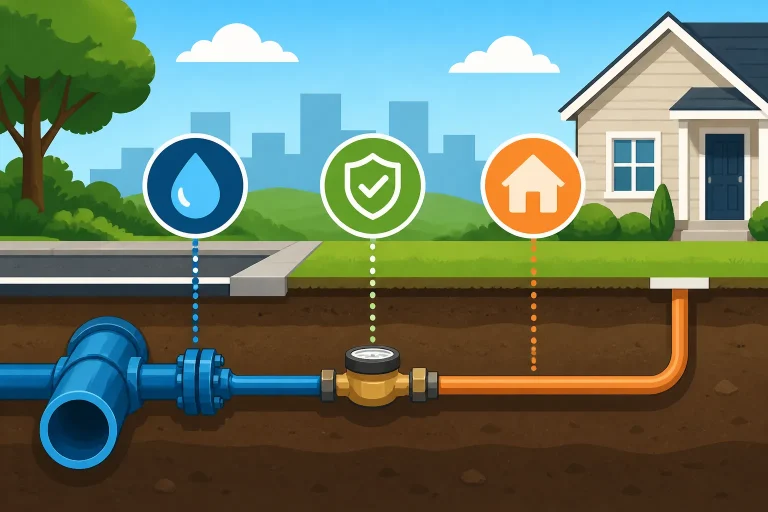
If the property has a unit, building, rear structure or shared service arrangement, mention those details when you ask the provider. The mailing address and the point where water service enters a property may not be described in the same way. The provider can clarify what address it associates with the service location and whether the notice applies to that service.
When several people in the household are checking, compare the same version of the notice. A screenshot saved earlier may not reflect a later boundary change or status update. Return to the provider’s current notice before making a decision, and ask directly if the map and written description appear to conflict.
Understand what the notice says and what it asks you to do
Not every water-related notice has the same purpose. A service outage, planned work update, water-quality advisory and boil-water instruction may call for different actions. The word “advisory” by itself is not enough to determine what you should do. Read the full notice and follow the specific instructions that the responsible provider or agency gives for the affected area.
Look for several pieces of information: the area covered, the issue prompting the notice, the actions customers should take, and any update about the notice’s status. A brief headline may not include all of those details. If a notice says to boil water, for example, use the instructions in that notice rather than substituting advice from an unrelated post or relying on a general description of boiling.
Do not assume that water looking or tasting normal means an advisory does not apply. Appearance and taste are not a substitute for the provider’s status information. Likewise, do not assume that a change in pressure, a repair update or the end of visible work means an advisory has ended. Wait for the responsible provider or agency to state the current instructions and status.
The boundaries matter just as much as the action. If the notice applies only to specified streets or a defined area, follow the provider’s directions for determining whether your address is included. If you live near the boundary, contact the provider rather than deciding based on proximity. If you are outside the described area but have a specific concern about your service, ask the provider how it applies the notice to your address.
If you are unsure which kind of notice you received, How to Check Georgia EPD’s Drinking Water Watch, Step by Step may help with understanding how to look up system information, while How Georgia Utilities Must Tell Customers About a Boil-Water Order addresses customer communications. For instructions on an active boil-water notice, see How Long to Boil Tap Water During a Georgia Boil-Water Advisory. These resources do not replace the current notice from the provider serving your home.
The safest reading is the literal one: follow the directions that the official notice gives, for the area it names, until the responsible provider or agency updates those directions. Do not broaden or narrow the area on your own. If the wording conflicts with a map or an alert you received, ask the provider to resolve the conflict.
What to do when the map or notice does not settle it
If the information does not clearly include or exclude your address, contact the provider directly. Use the official website to find current contact details. Explain that you are checking a specific current advisory, provide the complete service address and ask whether the instructions apply to that location. If you are renting, include the unit number and tell the provider whether the account is in the landlord’s name.
Ask focused questions so you leave with a clear answer. Is this exact address inside the affected area? Does the notice apply to the building or unit, or only to a nearby street? What instructions should residents at this address follow now? Has the provider issued an update that changes the area or customer instructions? If the provider cannot confirm, ask which official office or provider can.
Write down the response, including the name or department you spoke with and when you received the information. Keep a copy or screenshot of the notice and any message from the provider. This can help if the boundary changes, someone else in the household needs to follow the instructions, or you need to ask a follow-up question.
If you cannot reach the provider promptly and the notice could apply to your address, do not treat the lack of a reply as proof that you are outside the area. Follow any precautionary instructions in the current official notice while you continue trying to confirm coverage. If the notice does not provide directions for uncertain addresses, ask the provider or responsible official agency for guidance as soon as you can.
If the provider says another system serves the property, contact that provider using its official contact information. If you still cannot identify who is responsible, return to the property records and ask the landlord, property manager or account holder to help establish the supplier. The goal is to resolve the service boundary, not to infer it from a city name or the nearest visible map point.
For more context on who may issue or lift notices, read Who to Call in Georgia About Discolored Water With No Advisory? when the concern is discolored water, or Where Georgia Utilities Post Boil-Water Notices and the All-Clear for information about finding notice updates. A report about a nearby problem is not itself confirmation that your address is included.
Keep checking until the provider confirms the current status
An advisory can be updated, narrowed, expanded or lifted. A saved post, printed notice or message received earlier may not show the current instructions. Recheck the official provider’s notice when you first learn about the issue and again before you stop following the stated precautions. If the provider offers customer alerts, sign up or confirm that your contact information is current so future notices are easier to receive.
If you receive conflicting information, compare its source and timing. An official provider update should take precedence over an old screenshot, neighborhood conversation or an unverified repost. If two official pages appear to disagree, contact the provider and ask which information is current for your address. Avoid combining instructions from separate notices that refer to different areas or events.
Keep the complete notice rather than only a cropped map. A full notice may explain the boundary, identify the affected service area and describe what customers should do. A screenshot that omits the date, legend or written explanation can be difficult to interpret later. If you share information with household members or neighbors, include the provider’s official notice and encourage them to check their own service addresses.
For a recurring issue or ongoing concern, use the provider’s current information rather than assuming that a previous advisory still applies. Water conditions and service notices can change, and a past notice cannot establish what is happening now. If you are concerned about a taste or odor rather than a formal advisory, Odd-Tasting Georgia Tap Water: What Taste Can and Cannot Tell You explains why a sensory change alone cannot determine the advisory status.
A simple record can make the process less stressful: note which provider serves the address, where its official alert information is posted, what the current notice says, and how you confirmed coverage. Do not record or share private account details unnecessarily. The useful information is the provider, the relevant notice and the answer for the service address.
The main rule is straightforward: do not use proximity, a neighborhood name or a neighbor’s experience as a substitute for address-level confirmation. Identify the supplier, read the current official notice, compare its boundaries with the service address and ask the provider when anything remains ambiguous. That is the most dependable way to decide whether a Georgia water advisory covers your home.
Frequently Asked Questions
Does a nearby advisory automatically cover my home?
No. A nearby issue does not establish whether your address is included. Check the official notice boundaries and ask the provider to confirm your exact service address if you are uncertain.
What if my street is named but my house is near the edge of the affected area?
Do not infer coverage from proximity. Contact the provider and ask whether the notice applies to the complete service address, including any unit or building details.
Can I rely on a neighbor’s text or social media post?
Use it as a prompt to check, not as final confirmation. The post may be incomplete or outdated, and a neighbor may have a different water provider. Verify the current instructions with the official provider.
What should I do if the notice and map seem to disagree?
Contact the provider using current details from its official website. Ask which information applies to your address and what instructions you should follow while the discrepancy is being clarified.
Sources
- University of Georgia Cooperative Extension — Testing for Water Quality | CAES Field Report (checked November 13, 2026)
- Macon Water Authority (checked November 13, 2026)
Disclaimer
This article is for general informational purposes only and does not constitute professional advice. Laws, prices and regulations vary by location and change over time. Consult a qualified professional for guidance on your specific situation. Georgia Water Guide is not a government agency or water utility and is not affiliated with any public water system.