Odd-Tasting Georgia Tap Water: What Taste Can and Cannot Tell You
An odd taste can make Georgia tap water unpleasant and raise a fair question: is something wrong with the water, the plumbing, or just one faucet? Taste is a useful clue, but it cannot confirm safety. Here’s how to narrow down what may be happening, what to check next, and when to contact your water provider.
What an Odd Taste Can—and Cannot—Tell You
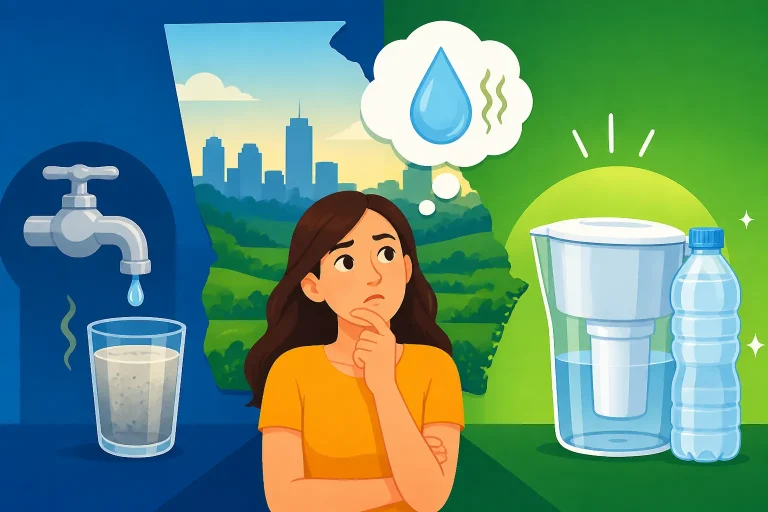
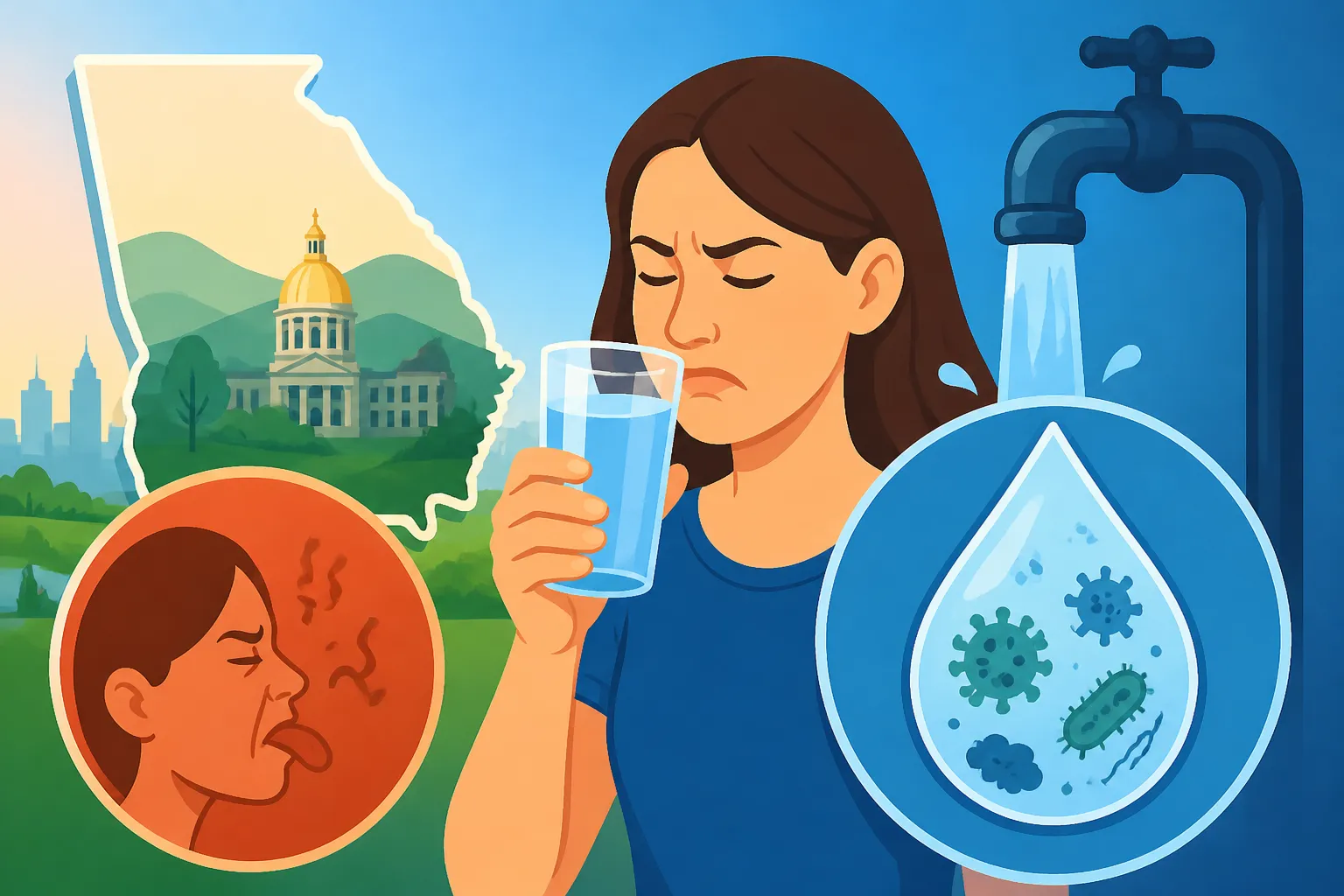
A taste change is worth noticing. It may point to a change in the water, the plumbing it travels through, a household filter, or even the way water has been stored. But taste is not a dependable safety test.
The University of Georgia Cooperative Extension says that taste, odor, and appearance does not indicate if the water is really safe. Confirm that principle with your official water provider or the appropriate agency if you have a concern: a pleasant-tasting glass does not prove there is no problem, and an unpleasant-tasting one does not establish that the water is unsafe.
That distinction matters because sensory clues are nonspecific. Several different causes can create similar tastes, and one cause can be described differently by different people. A metallic note, for example, is a description of what you sense, not a lab result identifying a substance. Likewise, a musty or earthy taste does not, by itself, reveal where the taste started or whether it presents a health concern.
Taste can still help you ask better questions. A sudden change across the neighborhood is different from an off taste at one kitchen faucet. A taste that appears only in cold water may suggest a different line of inquiry than one that appears only in hot water. These patterns help you describe the problem to the utility, landlord, plumber, or lab; they do not replace their assessment or a suitable test.
It also helps to separate two questions:
- What could be causing the taste? A change in the source or treatment, work on a water main, plumbing materials, a faucet, or an appliance may be relevant.
- Is the water safe for the use I have in mind? That question depends on official information, appropriate testing, and any current advisory or direction from the responsible authority—not on taste alone.
If you are worried about a possible health effect, ask your local health department or a medical professional. A water provider can explain system information and any notices it has issued, but personal medical questions are best directed to qualified health professionals.
For help distinguishing a taste concern from a known water-quality issue, see Health Limit, Taste Issue or Plumbing Clue in a Georgia Water Result and Who Checks Whether Georgia Tap Water Is Safe When It Tastes Off?.
Common Taste Descriptions and Useful Clues
People often reach for familiar words to describe tap water: earthy, metallic, chlorine-like, bitter, salty, or stale. Those descriptions are useful as observations, but they do not identify a cause on their own. Start by recording what you notice, where you notice it, and whether it is new.
| What you notice | What the description can help establish | What it cannot establish |
|---|---|---|
| Earthy or musty taste | The character of the taste and whether it resembles a recurring problem | The substance responsible, the source of the taste, or whether the water is safe |
| Chlorine-like taste | That the water has a sharp, pool-like or disinfectant-like quality to you | The amount present, whether it is within applicable requirements, or whether there is a health concern |
| Metallic or bitter taste | That the water has a distinct taste that may be worth comparing across taps | Which metal, pipe, fitting, appliance, or other source is involved |
| Salty or mineral-like taste | That the water tastes different from what you expect | The dissolved substances involved or their concentrations |
| Stale or flat taste | That the sample may have sat, warmed, or been stored in a way that affects your impression | Whether the water at the tap has the same taste or whether there is a safety issue |
| Sudden unusual taste | That the change is noticeable and may merit a report or further checking | Whether the change is widespread, temporary, or hazardous |
If you are trying to describe an earthy or musty taste, note whether it is faint or strong, constant or occasional, and present in water from more than one tap. A change across the whole home is a different clue from a change limited to a single faucet. The same distinction applies to other taste descriptions: the pattern matters more than the label.
A chlorine-like taste is another example where impression is not measurement. If the water has a sharp taste, report the change and ask the provider whether it has received similar complaints or whether there is relevant operational information. Do not assume that the taste proves the water is either safe or unsafe. How Much Chlorine Is Allowed in Georgia City Tap Water? and Chlorine Taste at Every Tap on the Street: A Georgia System-Wide Sign? offer more context for that particular description.
A metallic taste can prompt useful questions about the home’s pipes, fixtures, or plumbing history, especially if only one tap is affected. But taste cannot tell you whether lead or another metal is present. If lead is a concern, ask about appropriate sampling and use a qualified lab or the utility’s available process rather than trying to diagnose it by flavor. Start with Clean Mains, Older House Pipes: Where Lead Hides in Georgia Homes or Getting a Reliable Lead Test of Home Tap Water in Georgia.
Descriptions can also vary from person to person. One household member may call a taste “earthy” while another calls it “musty.” That difference does not make the observation useless. When contacting the provider, use the words that best describe it, then add the practical details: which taps, when it began, whether hot or cold water is affected, and whether neighbors have noticed it too.
Is It the Whole System, the Building, or One Tap?
A simple comparison can help narrow the next question. It cannot prove a cause, but it can help you report the issue clearly and decide whether to contact the utility, property manager, or a plumbing professional.
Compare taps in the same home
If the taste is present at several taps, the cause may be farther upstream than a single faucet. If it is limited to one tap, the fixture, its nearby plumbing, or an appliance connected to that line deserves attention. This is a clue, not a diagnosis: different parts of a building can still have different plumbing conditions.
Compare cold water with hot water, using fresh water from each tap. If the taste is only in hot water, tell the utility or plumber that detail rather than assuming the treatment plant is responsible. A household water heater or hot-water plumbing may be relevant, but a professional can help assess it. If the taste is in cold water at several taps, include that fact when you report it.
You can also compare a kitchen faucet with another faucet that is used less often. If the water has been sitting in a line, the first water drawn may taste different from water drawn after a short flush. If that happens, note it. Do not use flushing as proof of safety, and follow official guidance if an advisory or other notice applies.
Ask whether nearby households notice it
If neighbors served by the same provider report a similar new taste, a system-wide change becomes more plausible. It still does not confirm the cause or safety status. If the problem seems isolated to your building, your own plumbing, a shared service line, or an appliance may be part of the investigation.
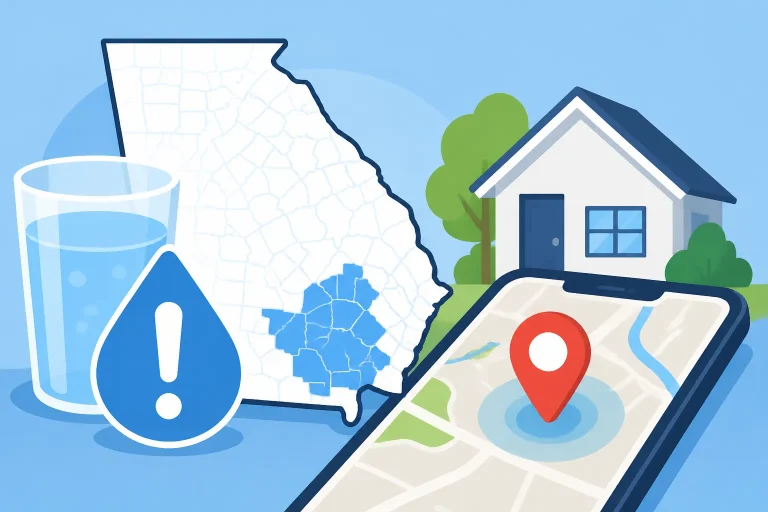
Do not assume that the person next door receives water from the same system. Georgia addresses can be served by different utilities or systems, even within a small area. Confirm your supplier if you are unsure; City Water or a Small Community System? Who Serves a Georgia Address and New Georgia Address? Confirm the Water Supplier Before You Move In explain ways to identify the provider for an address.
Think about where the water travels
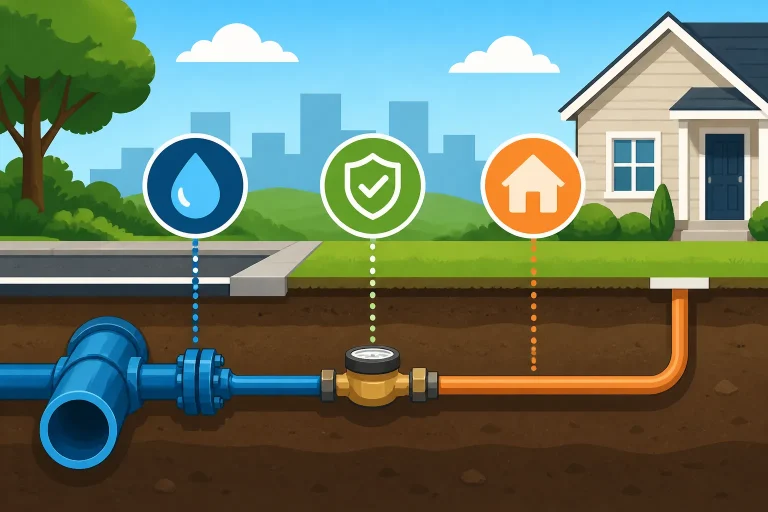
Water can change in taste as it moves through service lines, building plumbing, faucets, filters, and appliances. The utility’s system information does not automatically describe every fixture or every home’s interior plumbing. Conversely, a taste at your kitchen sink does not prove that the public supply has changed.
If you rent, let the landlord or property manager know when the taste is limited to the unit or building, while also contacting the water provider if you suspect a broader issue. If the same taste appears at several homes or public taps, tell the provider that pattern. Landlord or Utility? How Georgia Renters Call About Bad Tap Water can help renters decide whom to contact.
Keep the comparison fair
Use a clean drinking-water glass, and compare samples soon after drawing them. Avoid comparing water that has been sitting in an open glass with freshly drawn water, or water from a refrigerator dispenser with water straight from a tap, unless the difference between those sources is exactly what you are checking. Refrigerators and filters can change taste, and their maintenance history may matter.
Write down the date, time of day, location, whether the water was hot or cold, and how the taste changed. These notes are more useful than repeatedly sampling without a plan. If the taste is sudden, strong, or accompanied by a notice, contact the provider rather than waiting for a pattern to become clearer.
A Practical Response When Tap Water Tastes Different
Use a calm, stepwise approach. The goal is to gather useful details and get advice from the people responsible for the water or plumbing—not to diagnose a contaminant by taste.
- Check for an active notice. Look at the official water provider’s current notices and any reliable local emergency communications. If an advisory applies to your address, follow its instructions. Do not use taste, smell, or appearance to decide that an advisory no longer matters. For address-specific checks, see How to Check Whether a Georgia Water Advisory Covers Your Address.
- Confirm who supplies the address. If you are unsure which water system serves your home, ask the property owner or use the appropriate official provider information. A nearby city or neighbor may not be served by the same system.
- Describe the pattern. Note where the taste occurs, whether it affects hot or cold water, when it started, and whether it changes after water has run. Ask nearby residents whether they have noticed the same thing, without treating their answers as confirmation of safety.
- Contact the provider. Report a new or persistent taste, especially if it affects several taps or appears to be widespread. Ask whether the provider has received similar reports, whether there is relevant maintenance or water-quality information, and what it recommends for your address. Use the official provider’s website to find current contact details.
- Check the household side. If only one tap, appliance, or building is affected, speak with the landlord, plumber, or appliance service professional as appropriate. If you own the home, share your observations and any relevant plumbing or filter history.
- Choose testing based on the question. If the concern involves a specific substance or health-related issue, ask the provider, local health department, or a qualified laboratory what test is appropriate and where the sample should be collected. A general home test or a taste comparison may not answer a specific safety question.
- Keep following official instructions. If a utility or public agency issues an advisory or gives a specific recommendation, rely on that information rather than trying a filter or boiling water as a substitute.
When you call or write, be specific but avoid making a diagnosis. “The cold water tastes metallic at the kitchen sink and bathroom faucet, starting today” is more actionable than “the water is contaminated.” If you have a report from a lab, include the result and the sample location, but do not interpret it beyond what the lab or relevant professional explains.
If you are considering a test, first identify what you want to learn. A test for hardness does not answer a lead question. A taste-and-odor panel may not answer a question about a particular contaminant. The sample point matters too: water at the faucet, after a filter, or at another location may answer different questions. How to Test Drinking Water in Georgia: Labs, Kits and Local Offices and Reading a Georgia Water Test Report: Results, Limits and Next Steps explain how to match a test and its results to the concern.
How to Use Water Reports and Official Notices
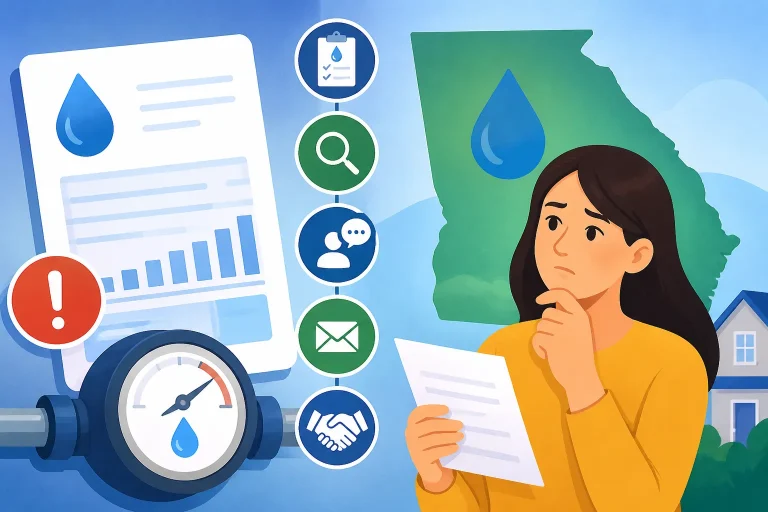
A utility report can provide important context, but it is not a direct taste test of your home’s faucet. It may cover water supplied by the system and report specified monitoring results, while leaving questions about an individual building’s plumbing unanswered. A report also needs to be matched to the right supplier and service area.
Start by confirming the water provider for your address. Then look for its consumer confidence report and any current notices. A report from a neighboring city, county, or wholesale supplier may not describe the water delivered to your specific home. If a provider buys water from another system, ask which report applies and what information is available for the water it delivers.
Read the report for the details that relate to your question, but don’t assume that a listed result explains a taste. The report may include measurements and monitoring information that differ from what your senses detect at home. Conversely, a taste change can occur without providing a clear clue about which line in a report to examine. If you are unsure how to interpret a result, ask the water provider or a qualified professional what it means for your specific concern.
A report is also not a substitute for checking current notices. If there is an advisory, service interruption, or other instruction that applies to your location, follow it even if the water tastes normal. If you have questions about whether a notice includes your address, contact the responsible provider or agency using its official website. What Georgia Consumer Confidence Reports Contain and When They Come, Annual Report or Drinking Water Watch? Checking a Georgia Utility, and Where Georgia Utilities Post Boil-Water Notices and the All-Clear cover related ways to find system information.
When contacting the provider, ask focused questions:
- Has the provider received similar taste reports from nearby customers?
- Is there a known operational change or work in the distribution system that could be relevant?
- Is there an advisory or notice for the address?
- Is there a water-quality report or test result that helps answer the concern?
- If testing is recommended, who collects the sample and what sample point should be used?
- If the issue appears limited to a home, what should the resident ask a plumber or landlord to check?
These questions help separate general reassurance from information specific to your concern. If the answer is only that the system meets a standard, clarify whether that statement addresses the particular taste, the specific contaminant you are concerned about, and your home’s plumbing. A general system result and a tap-specific test are not interchangeable.
Filters, Bottled Water, and Other Short-Term Choices
A filter may improve a taste, but choosing one before identifying the problem can lead to disappointment. Products are designed or certified for particular reductions; no single filter should be assumed to remove every substance or resolve every cause of an odd taste. Check the product’s certification and performance claims against your actual water test results and the problem you want to address.
If the taste is earthy or musty, a carbon-based product may be marketed for taste and odor reduction, but the label and certification are what matter. If the concern is lead, choose a product certified for lead reduction and install it as directed; a general taste filter is not automatically a lead filter. If you are concerned about another contaminant, check that the certification specifically covers it. The right choice depends on the substance, the sample result, where the filter will be installed, and how it will be maintained.
A filter can also become part of the taste problem if it is overdue for replacement, installed incorrectly, or used outside its instructions. Check the manufacturer’s directions, the cartridge model, and any required maintenance. A refrigerator dispenser may have its own cartridge, so a bad taste from fridge water does not necessarily indicate the same issue at the kitchen faucet. If the water tastes unusual only after passing through a filter, check the device before assuming the utility supply is the cause.
Bottled water can be a temporary preference if you dislike the taste, but it does not identify the source or prove that tap water is unsafe. If an official notice gives specific instructions about drinking or cooking water, follow that notice; do not assume bottled water is always necessary or that a household filter is an acceptable replacement. Compare options based on the actual instructions and the question you need to answer. Filter or Bottled Water While Georgia Tap Water Tastes Off? discusses those trade-offs.
Boiling is not a general remedy for an unusual taste, and it does not answer every kind of water-quality concern. Boil water only when an official instruction calls for it, and follow that instruction exactly. If an advisory applies, a home filter or reverse-osmosis unit should not be treated as a substitute unless the responsible authority specifically says it is suitable for the situation. For the limits of boiling, see Boiling Kills Germs but Not Lead: Limits of Boiling Georgia Tap Water.
If a professional recommends treatment, ask what specific result the device is designed to address, what certification supports the claim, where it should be installed, how to maintain it, and whether a follow-up test is appropriate. A sales demonstration or a taste improvement alone does not establish that a device has corrected a safety issue. The safest purchase decision is one made after you understand the concern and have suitable test results.
When to Escalate and What to Keep Track Of
A taste complaint deserves more attention when it is sudden, persistent, widespread, or accompanied by an official notice or another unusual change. That does not mean the water is necessarily unsafe; it means the provider or another qualified professional should have enough information to assess the situation.
Contact the water provider promptly if the taste changes across several taps, if neighbors report a similar change, or if you cannot tell whether an advisory applies. If the issue appears limited to one faucet, one appliance, or one building, tell the landlord or a plumbing professional as well. If you rent and do not know who is responsible for the building’s plumbing, notify the property manager and ask how the concern will be checked.
If the water also looks discolored or has a new odor, describe each observation separately. Do not conclude that a taste issue is harmless because the water looks clear, or that a visible change proves a particular contaminant is present. Brown Tap Water in Georgia: Advisory, Main Work or Your Own Pipes? and Who to Call in Georgia About Discolored Water With No Advisory may help you decide what information to report.
Keep a brief record of:
- When the change began and whether it is continuing
- The taps or appliances where you notice it
- Whether it affects hot water, cold water, or both
- Whether a short flush changes the taste
- Whether nearby households report a similar change
- Any official notice or advice you received
- Any sample collected, including where and how it was collected
- Any filter or plumbing work that may be relevant
That record can prevent repeated, vague reports and help the utility or professional identify a pattern. If someone collects a sample, follow the collector’s instructions closely; a sample handled incorrectly may not answer the question you intended to ask. If you collect one yourself, confirm the right container, sampling method, and delivery instructions with the lab before filling it.
When the provider replies, ask what the response is based on. It may be a review of system records, reports from other customers, an operational check, or a sample. Those are different kinds of information. If the provider recommends additional testing, ask what the test is intended to detect and whether the sample should come from the utility side or your home tap.
For health questions, contact your local health department or a medical professional. For water-system questions, use the official provider or agency responsible for the address. If the issue is plumbing inside a rental or home, the property owner or a qualified plumber may need to investigate. These roles can overlap, but identifying the right one helps avoid treating a household plumbing issue as a system-wide problem—or overlooking a broader concern because one tap was checked.
Frequently Asked Questions
Does bad-tasting tap water mean it is unsafe?
No. Taste, odor, and appearance cannot establish whether water is safe. The University of Georgia Cooperative Extension says that taste, odor, and appearance does not indicate if the water is really safe. Check current official notices and contact the water provider or appropriate agency if you are concerned.
If my tap water tastes normal, can I assume it is safe?
No. Water can taste normal without that proving its safety. Use official reports, notices, appropriate testing, and advice from the responsible provider or agency rather than relying on taste.
Why does the taste seem different at only one faucet?
A localized difference can point toward a faucet, nearby plumbing, or an appliance as a useful place to investigate. It does not prove the cause. Compare other taps and share the pattern with your landlord, plumber, or water provider.
Should I buy a filter for an odd taste?
Not before checking what you want the filter to do. Look for certification for the particular substance or taste-and-odor concern, and compare it with suitable water-test results. Follow maintenance instructions; a filter is not a substitute for official advisory directions.
Should I boil water that tastes strange?
Do not boil water just to address a taste unless an official instruction tells you to. Boiling is not a universal solution for water-quality concerns. Check the provider’s current notices and follow any directions that apply to your address.
Sources
- University of Georgia Cooperative Extension — Testing for Water Quality | CAES Field Report (checked November 13, 2026)
Disclaimer
This article is for general informational purposes only and does not constitute professional advice. Laws, prices and regulations vary by location and change over time. Consult a qualified professional for guidance on your specific situation. Georgia Water Guide is not a government agency or water utility and is not affiliated with any public water system.